What good is an email if no one opens it? This isn’t meant to be a philosophical mind-bender, we promise! We think you know the answer: It doesn’t matter how compelling your copy, how beautiful your images, or how enticing your call-to-actions are; if no one opens your email, the email is rendered mostly useless. That’s not what you want to hear, is it? After all, email is a main driver of online revenue.
So, how can you make sure people open your emails?
There are great articles out there about things like emoji use in email subject lines, the five words that will help you increase donations, and inbox or email fatigue. Today, however, we want to focus on something else: email send time.
In The State of Nonprofit Email Cultivation, a free research report analyzing how 199 nonprofits communicate with subscribers and donors in the first 45 days, the NextAfter team found that most organizations send emails at the same time. They also reported that 49.9% of cultivation emails and 65.4% of solicitation emails are sent between 6am and 1pm.
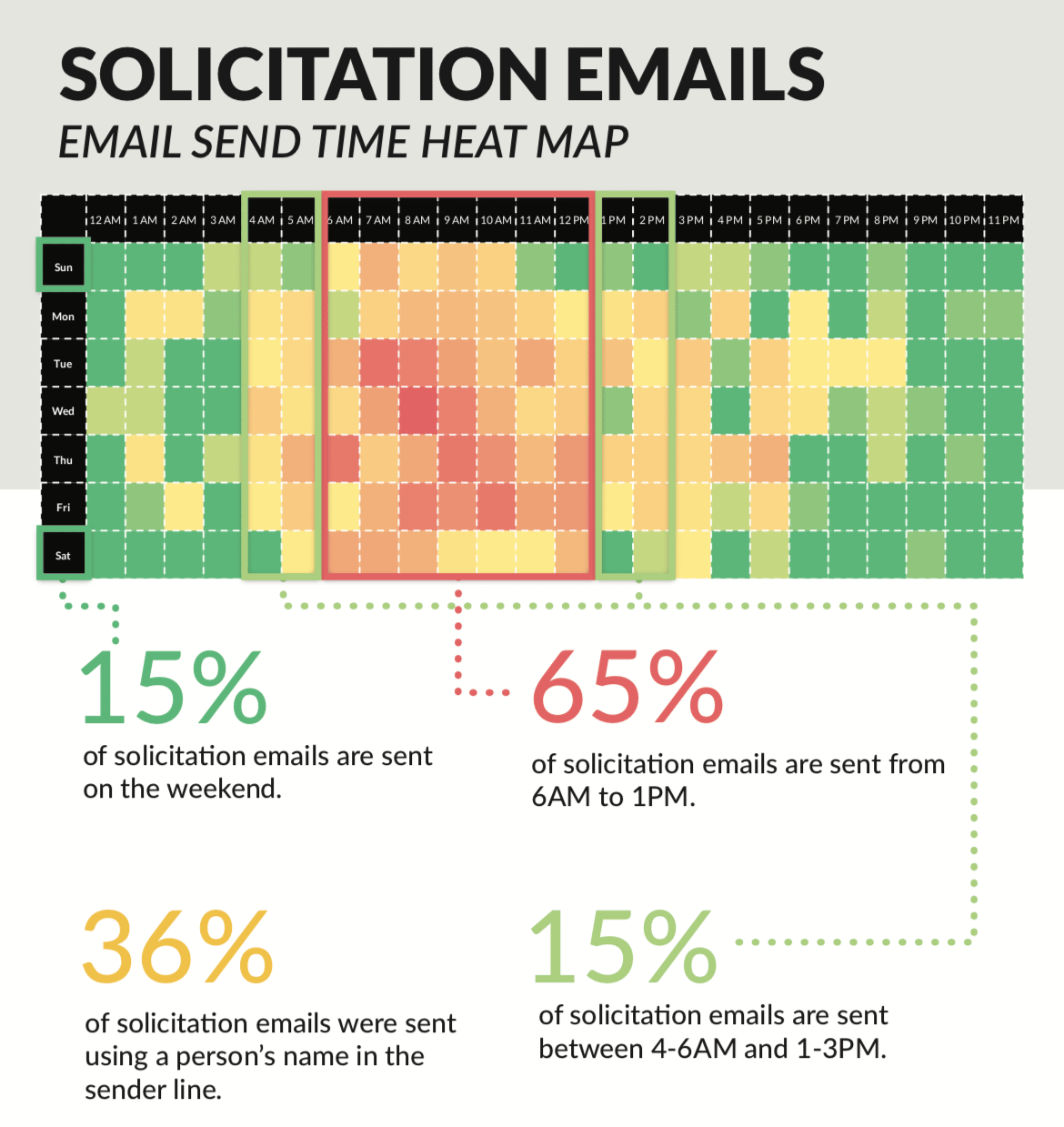
Image taken from The State of Nonprofit Email Cultivation Study
How can you stand out?
Test sending emails during off-peak hours, like on evenings and weekends. There is the chance that fewer people will open and click the emails since they may not be on their phones or computers or checking their inboxes; however, your engagement might actually increase.
According to the report, this might be because people may be “more ready to give on a weekend as opposed to when they’re at work. Or it could simply be that they may actually read your whole email since they’re working a little slower and not just trying to get through their inbox.”Take a look at your emails and when you’re sending them. Then figure out how you can slowly and purposefully test different send times. If you notice an increase in engagement or donations from emails sent during off-peak hours, think about how you can incorporate off-peak send times into your overall email strategy.
To learn more about the emails nonprofits are sending, download the free research report here.