A nonprofit CRM, also known as donor management software, helps organizations understand and grow their relationships with donors. According to the Nonprofit Tech for Good report, 67% of nonprofits use a CRM to track donations and manage communications.
As a nonprofit professional, it’s essential to understand how a CRM can improve your nonprofit’s data reporting and relationship management. You may also be looking to upgrade your current CRM system. If so, you’re in the right place!
In this guide, we’ll explore the basics of nonprofit CRMs and a few top platforms to consider. Here’s what to expect:
The right CRM can optimize your nonprofit’s fundraising efforts for years to come, making it worthwhile to spend some time finding the best solution for your needs.
A nonprofit CRM allows nonprofits to store, report on, and update donor data. You may have also heard this software referred to as a donor database, but a CRM is much more than just a directory of donor information.
In addition to organizing donor data, these tools also identify giving trends and make recommendations to increase the likelihood of receiving future donations.
CRMs are also used in the for-profit sector to manage customer relationships. Some CRMs can serve both nonprofits and for-profits, but a dedicated system for your specific organization type is always best. Nonprofit CRMs offer nonprofit-specific tools, such as donor engagement metrics and online giving functionality.
Though some alternatives exist, using a CRM is widely considered the best way for organizations to analyze and keep all their data secure.
A CRM for nonprofits is a great alternative for organizations that have outgrown spreadsheets and want a platform where they can leverage their data to improve their fundraising campaigns.
A nonprofit CRM can help with fundraising by predicting which donors are the most likely to give in larger amounts, showing if and how donors are connected, and offering insight into their giving habits. For instance, with Bloomerang’s CRM solution, you can track how often donors give and predict when and how much they are likely to donate in the future.
The right CRM can help nonprofit professionals find the data and donor information they need in a matter of seconds, saving time and resources. That way, they can invest more of their energy in their organization’s mission.
Here are some ways a nonprofit CRM can help your organization simplify its daily activities:
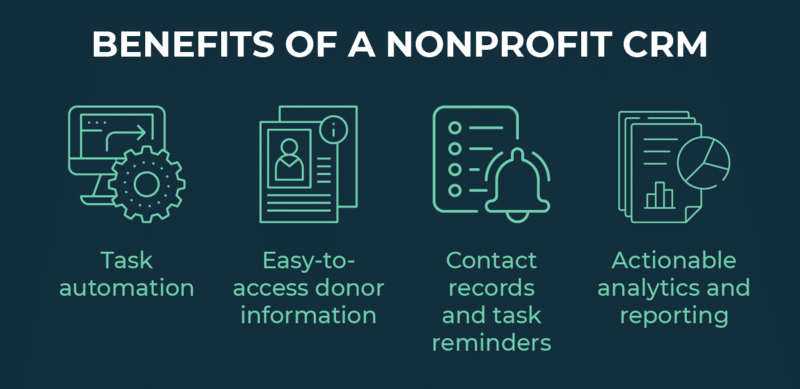
Task automation can save plenty of time for your donor relations team members, sometimes saving even full work days that would otherwise be spent conducting manual data tracking and uploads.
A nonprofit CRM automates reporting, creates donor groups, identifies potential major donors, and integrates with your email marketing platform. All of these functions create a more personalized donor experience and a simpler user experience for your team.
With a CRM, you can find any donor information you need in just a few clicks. Whether you need to update a donor’s address or remind yourself of the last time a donor gave, your CRM makes it easy to search for this information.
A powerful CRM offers features that streamline relationship management. For example, contact profiles give you a detailed record of every interaction you have with donors. Assess when your donors last gave and how much they gave. See what emails you’ve sent them and what you talked about during your phone calls or in-person meetings. Set reminders to schedule a thank you phone call with your major donors so no one falls through the cracks.
Your nonprofit manages a lot of data. If you don’t have a CRM, your data is likely spread out in several different platforms, including your email marketing platform, online fundraising platform, and payment processor. With a CRM, you’ll be able to keep all your valuable data in one location.
Your nonprofit CRM should also be able to run reports to help you identify your lapsed donors or a first-time givers report so you can send these individuals a welcome email series. Plus, a nonprofit CRM can give you high-level insights into your organization, showing visuals like a donor pyramid or donor lifecycle. This makes it easy for you to see the health of your organization at a glance.
Choosing the right nonprofit CRM can feel overwhelming—we get it. That’s why we put together this handy list of top solutions to help you compare your options. Explore key features, pricing details, and pros and cons from user experiences. Whether you’re just starting your search or narrowing down your list, this guide will help simplify the process.
Overview:
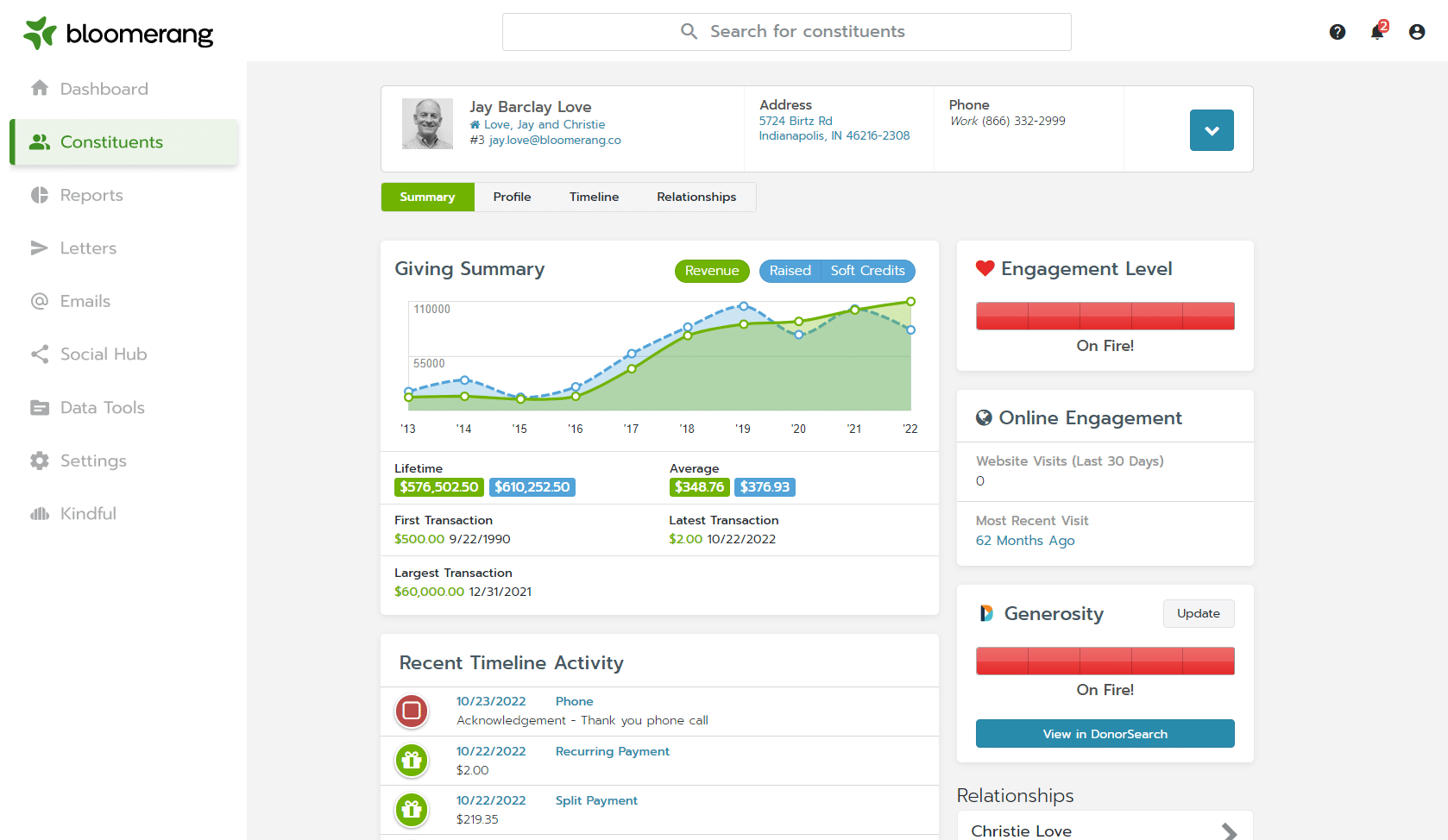
Bloomerang’s nonprofit CRM is your window into the complete giving picture. Supporters aren’t one-dimensional, and your CRM shouldn’t be either. That’s why Bloomerang’s tools are built to give you a 360-degree view of every donor, volunteer, and advocate. With an interactive dashboard, constituent timelines, and intelligent data segmentation, you’ll uncover insights that help you build stronger relationships and make every ask more meaningful. And it doesn’t stop there. Bloomerang brings powerful online fundraising tools to the table so you can create beautiful, streamlined donation pages, embed them on your website, and share them via email or social media. It’s everything you need to connect with your supporters, all in one purpose-built, easy-to-use platform.
Features:
Why Bloomerang is the top nonprofit CRM option:
Customers love our software because it’s a tool built for fundraisers, by fundraisers. They note our user-friendly interface, caring and responsive customer service, and robust reporting features as our platform's top benefits.
Pricing:
Bloomerang’s CRM pricing starts at $125 per month and scales up based on the number of records or contacts in your system.
Overview:
Salesforce is the most widely used CRM software for businesses. Salesforce offers a nonprofit solution called the Nonprofit Success Pack (NPSP).
Features:
Things to love:
Salesforce offers all-in-one CRM functionality with robust tools for relationship management. It’s a powerful platform with a lot of flexibility.
Things to consider:
Because Salesforce is such a large and complex system, many nonprofits need to hire a consultant to get things set up just right. That added cost and ongoing maintenance can be a stretch for smaller teams with limited budgets. Alternatives like Bloomerang are designed specifically for nonprofits, with fundraising best practices baked into the platform.
Pricing:
Salesforce’s nonprofit pricing starts at $60 monthly per user and scales up from there based on the level of functionality your organization wants.
Overview:
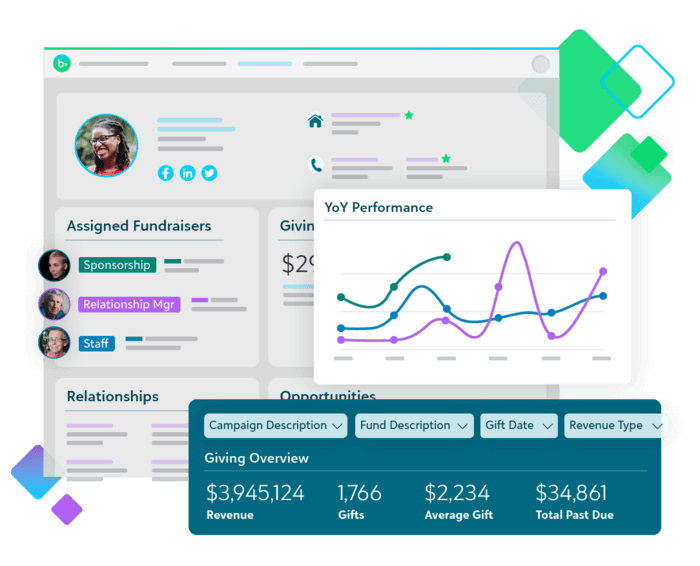
Blackbaud Raiser’s Edge NXT is a fundraising and donor management platform that prioritizes helping nonprofits increase their donor bases and gifts and grow their overall fundraising revenue.
Features:
Things to love:
This platform offers strong reporting capabilities and a wide range of functionality through its modular setup, making it great for nonprofits that need flexibility.
Things to consider:
Raiser’s Edge NXT comes with complex, highly technical overhead functions that can be challenging for busy nonprofit teams to understand. In contrast, tools like Bloomerang offer the advanced functionality growing nonprofits need without confusing onboarding processes.
Pricing:
Contact the Blackbaud team for pricing.
Overview:
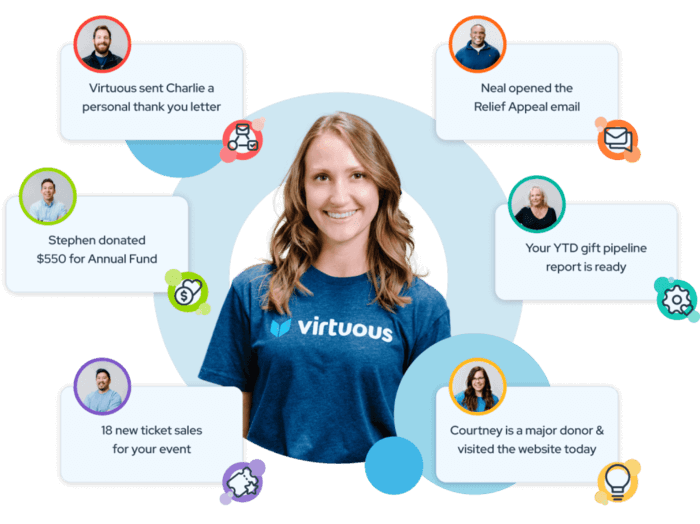
Virtuous is a responsive nonprofit CRM devoted to helping organizations craft a personalized experience for donors at every level.
Features:
Things to love:
Virtuous offers an intuitive, easy-to-learn interface and powerful automation tools that help nonprofits streamline donor communications and workflows.
Things to consider:
Since Virtuous was designed to work well right out of the box, some users have found it offers less flexibility when it comes to customization. Additionally, complex setups can hinder your progress early on, unlike Bloomerang, which offers simplified, streamlined workflows.
Pricing:
Get a quote on the Virtuous website.
Overview:
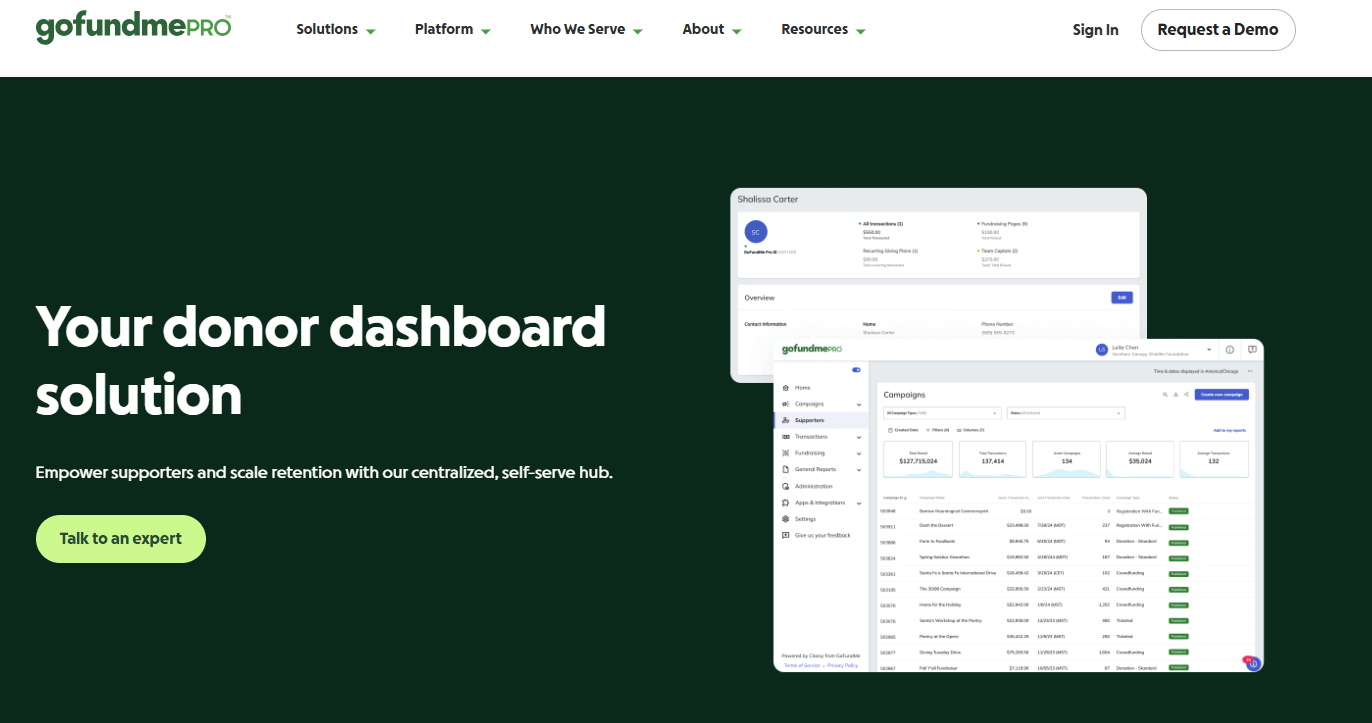
GoFundMe PRO (formerly Classy) helps nonprofits raise more through a robust online fundraising platform and a central supporter management CRM.
Features:
Things to love:
GoFundMe PRO makes it easy to launch fundraising campaigns quickly, thanks to helpful templates, step-by-step guidance, and webinars.
Things to consider:
The design flexibility for DIY fundraising pages is limited if you're looking for a fully custom look.
Pricing:
Connect with the GoFundMe team for custom pricing.
Overview:
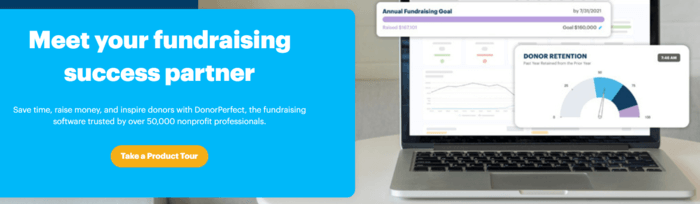
DonorPerfect is a nonprofit CRM and fundraising hub for coordinating donor management efforts, fundraising campaigns, and marketing strategies all in one platform.
Features:
Things to love:
DonorPerfect offers extensive customization options, allowing nonprofits to tailor the platform to their specific workflows, data needs, and fundraising strategies.
Things to consider:
Certain data functions aren’t as intuitive as they could be because DonorPerfect takes a more fragmented approach to data, reporting, and analytics. Plus, DonorPerfect’s donor journey functionality is outdated and doesn’t make the best use of personalized workflows. Many customers turn to a unified, seamless solution like Bloomerang instead to take advantage of innovative, customized workflows.
Pricing:
Contact DonorPerfect for a personalized price quote.
Overview:
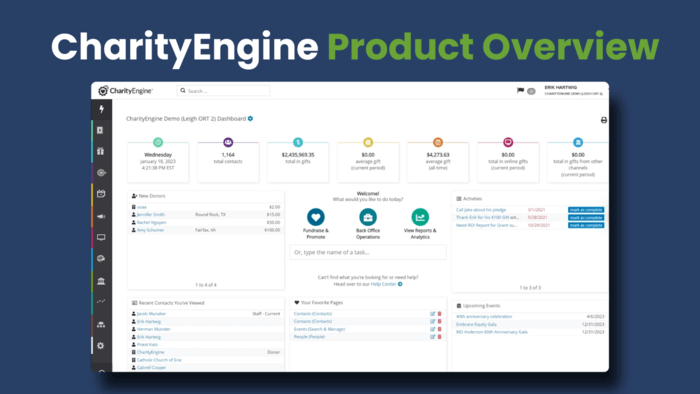
CharityEngine’s donor management solution helps nonprofits keep donor information at their fingertips with automation and multichannel communication features.
Features:
Things to love:
CharityEngine excels at flexibility and customization, especially for growing and enterprise-level nonprofits that need robust functionality. Its all-in-one platform is designed to support high donor retention and long-term growth with tools that scale alongside your mission.
Things to consider:
Because of its advanced capabilities, the onboarding process can take longer. The platform also uses unique terminology, which may have a steeper learning curve for teams familiar with more standard nonprofit tools
Pricing:
Talk to the CharityEngine sales team for a quote.
Overview:
Keela’s donor management system helps nonprofits increase donor retention with personalized stakeholder engagement strategies and efficient fundraising tools.
Features:
Things to love:
Keela offers responsive customer service and a robust all-in-one platform that helps nonprofits smoothly manage everything from donor relationships to fundraising campaigns.
Things to consider:
Certain integrations can feel clunky or tricky to set up, which might require extra patience. Other platforms, like Bloomerang, don’t require stitching together multiple tools to get your data management and fundraising analytics up and running quickly.
Pricing:
Keela’s pricing starts at $134 per month.
Overview:
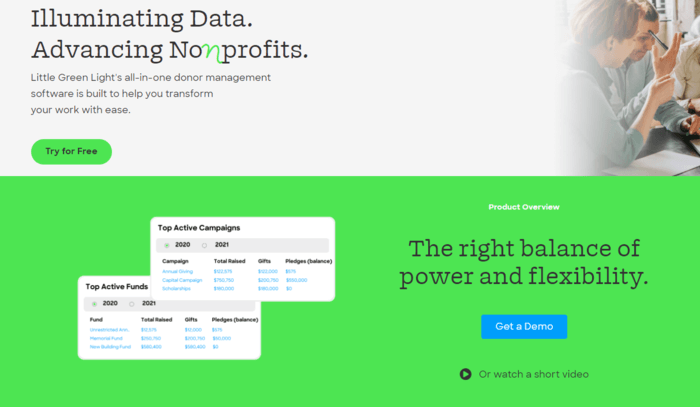
Little Green Light is an all-in-one donor management platform and fundraising tool that can grow alongside your nonprofit as it expands its reach.
Features:
Things to love:
Little Green Light is highly user-friendly, even for non-tech-savvy users, and it’s an excellent fit for smaller nonprofits working with tight budgets.
Things to consider:
Some users have pointed out that the platform can lack features or certain functionalities they were hoping for. Growing organizations typically turn to more robust platforms like Bloomerang, which can scale as their nonprofit expands.
Pricing:
Little Green Light’s pricing starts at $486 annually.
Overview:
Giveffect describes itself as “10-in-1 Nonprofit Software,” combining tools for online giving, volunteer management, events, relationship management, and more into one platform.
Features:
Things to love:
Giveffect integrates several nonprofit processes into one place, saving time with a user-friendly interface.
Things to consider:
Some users feel that the smaller pricing plans don’t include all the robust features they need, so it’s worth checking what’s included before investing in this solution.
Pricing:
Schedule a call to get pricing details.
Overview:
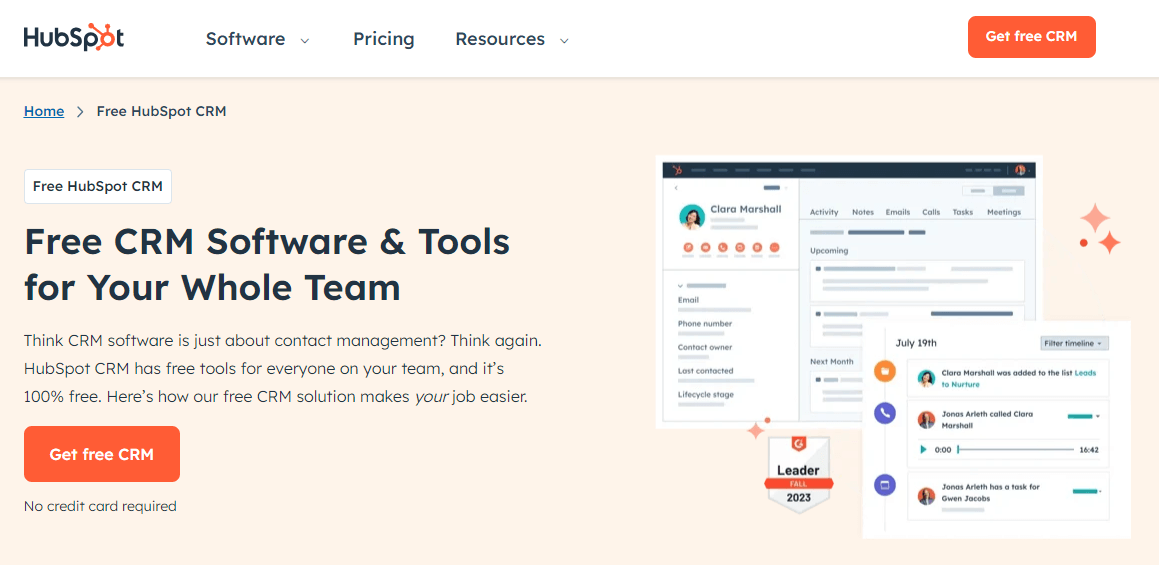
HubSpot CRM is a free contact management and marketing platform. The sales features of this platform can help nonprofits develop a giving pipeline and foster leads within their communities.
Features:
Things to love:
HubSpot CRM offers seamless website integrations and is a good fit for organizations that approach fundraising with a strong marketing and sales mindset.
Things to consider:
It can have a steeper learning curve for beginners, and because it relies heavily on integrations, getting everything set up just right might take some time.
Pricing:
HubSpot’s basic CRM features are free. Learn about paid options on their website.
Overview:
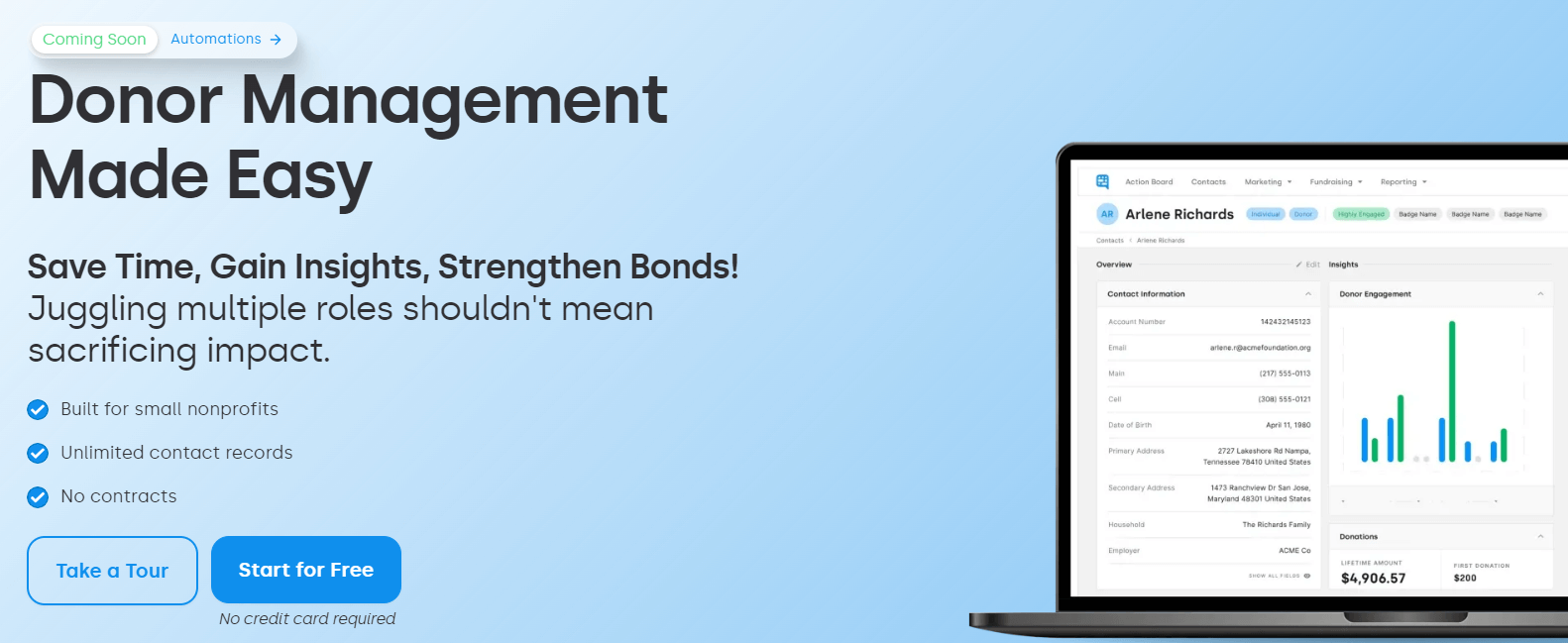
DonorDock’s donor management system is built for small nonprofits. The platform offers unlimited contact records, online giving solutions, and other options to help grow fundraising.
Features:
Things to love:
DonorDock is easy to use and budget-friendly, perfect for smaller nonprofits looking to keep things simple and affordable.
Things to consider:
Many integrations require Zapier, sometimes making the process clunky or indirect.
Pricing:
Starts at $120 per month.
Overview:
Bonterra offers a robust suite of fundraising and donor management products for nonprofits. Their solutions help facilitate donor engagement, program management, advocacy, volunteer coordination, and more.
Features:
Things to love:
Bonterra’s all-in-one system makes it easy to see all your supporter engagement efforts in one place, helping your teams collaborate smoothly across departments.
Things to consider:
Onboarding can take some time, and some users feel the many features create a confusing rather than streamlined experience. Pricing isn’t always transparent, and many have found its complex product ecosystem less reliable than unified, straightforward platforms like Bloomerang.
Pricing:
Request pricing on the Bonterra website.
Overview:
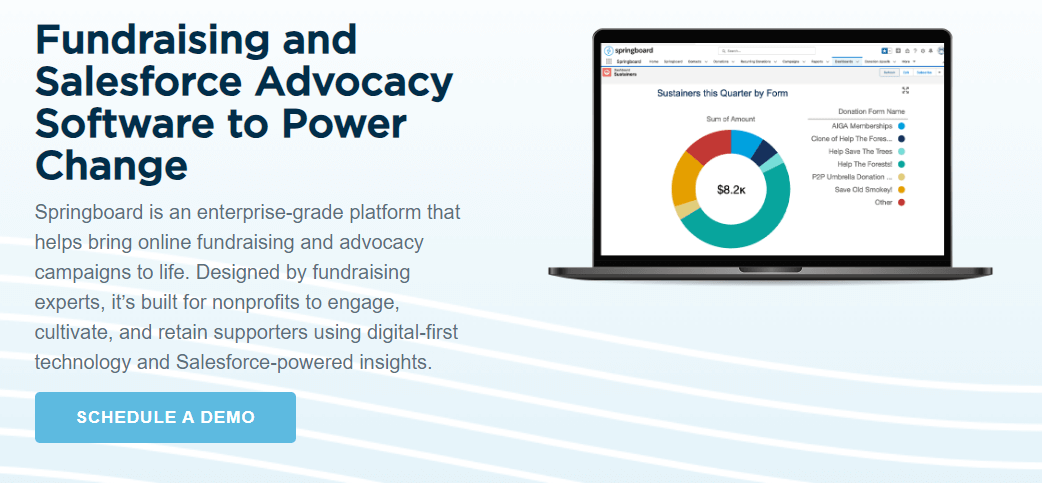
Springboard by Jackson River is a fundraising and advocacy platform built for the Salesforce Nonprofit Cloud. The platform leverages Salesforce-backed data insights to support nonprofit growth.
Features:
Things to love:
Springboard offers robust features and a high level of customization, making it a compelling choice for nonprofits with specific and advanced needs.
Things to consider:
Because of its extensive capabilities, the price point can be higher, making it less accessible for smaller organizations.
Pricing:
Contact Jackson River for pricing information.
Overview:
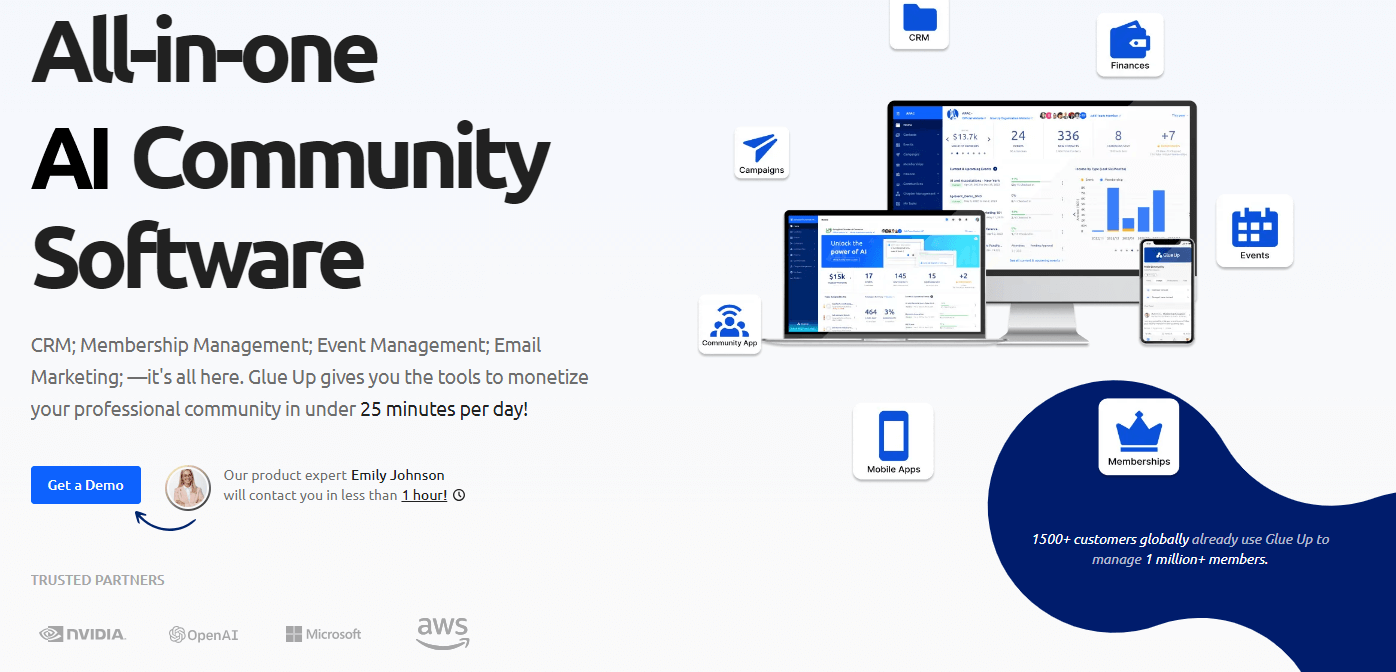
GlueUp offers constituent management tools for keeping communities organized and engaged. Their membership CRM centralizes supporter data to help improve campaigns.
Features:
Things to love:
GlueUp streamlines workflows and saves your team valuable time, making day-to-day nonprofit management easier.
Things to consider:
Some users mention a learning curve to get fully comfortable, and the tool can be pricey.
Pricing:
Contact GlueUp for pricing.
When reviewing nonprofit CRM features to find the right solution for your organization, look for the following features:
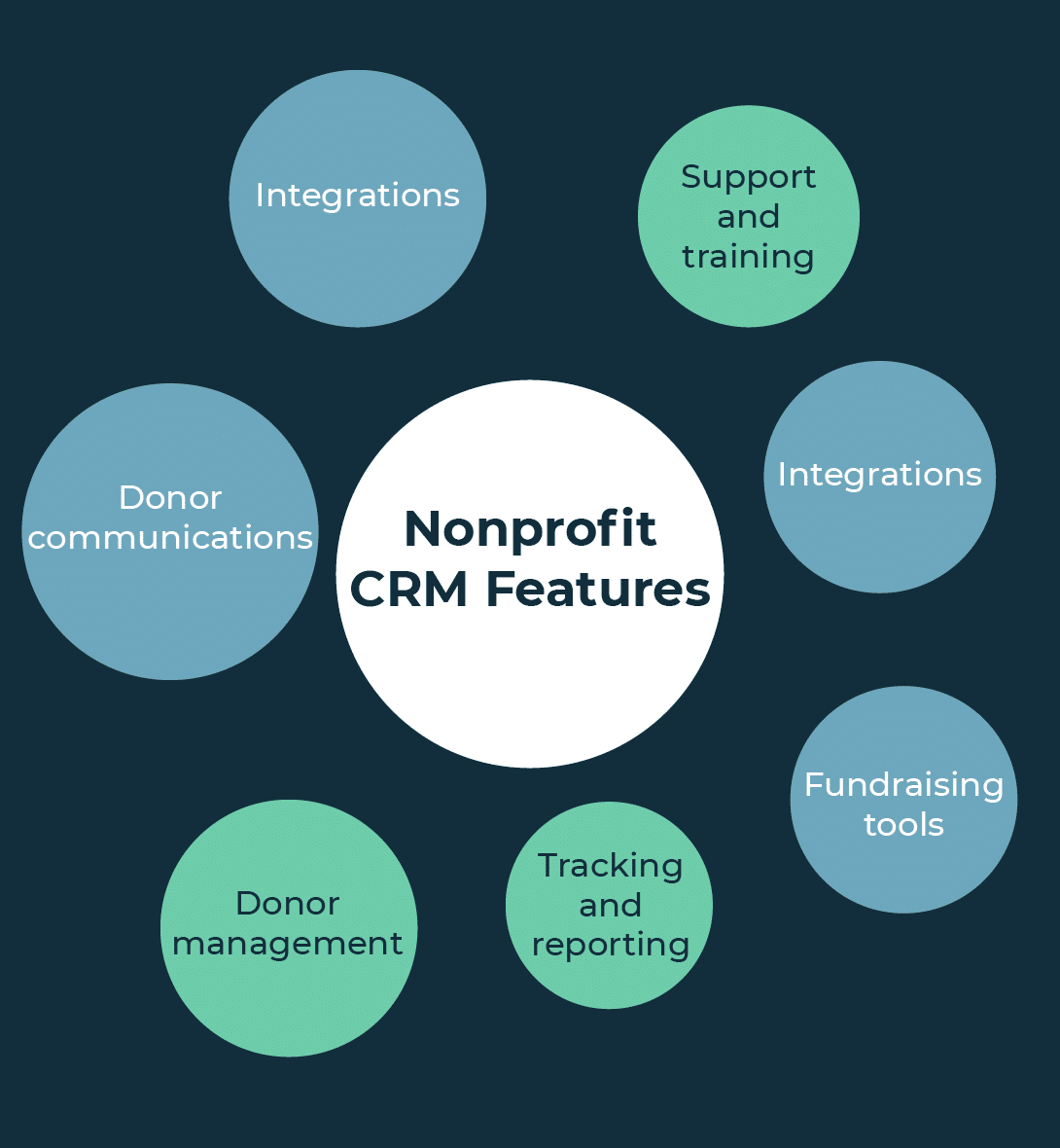
Your nonprofit CRM’s fundraising tools should allow you to easily create online fundraising campaigns and pages and add them to your website, social media, and email marketing campaigns. Your fundraising tools should also give you a deeper understanding of how your donors give, whether it’s online, in person, or through other giving channels. You should be able to seamlessly transfer donor data from your fundraising tools to your CRM database to add new donor information to your records.
Donor communications features give you the ability to automatically send fundraising receipts, create to-do lists for your team, and thank donors when they give to your organization. Most tools will also allow you to segment your donors by specific filters and then easily add them to a group based on shared characteristics. Then, you can effortlessly send letters to different segments and sync them with your email marketing platform.
With donor management tools, you can track all of your fundraising efforts, communications, and other essential activities. You’ll also be able to understand your donors better with key insights on big-picture trends alongside day-to-day specifics.
Most donor management tools also offer tracking and reporting features, meaning you can quickly spot trends and immediately take action to improve the health of your organization. You can also build, save, and schedule custom reports to easily access the information that matters most to your organization.
You’re likely already using software for online fundraising, payment processing, accounting, and communication. The good news is that you don’t have to give up the tools you’re already using when you invest in a nonprofit CRM that offers robust integration options. Review each of your CRM options to determine whether they integrate with:
Even the most tech-savvy users will likely need help with their CRM at some point. Your CRM provider should be available to help when you need it. Here are some types of support to ask about:
Now that you know some of the top CRMs for nonprofits, how do you choose the one that’s best for your organization? We recommend considering the following questions to help you compare.
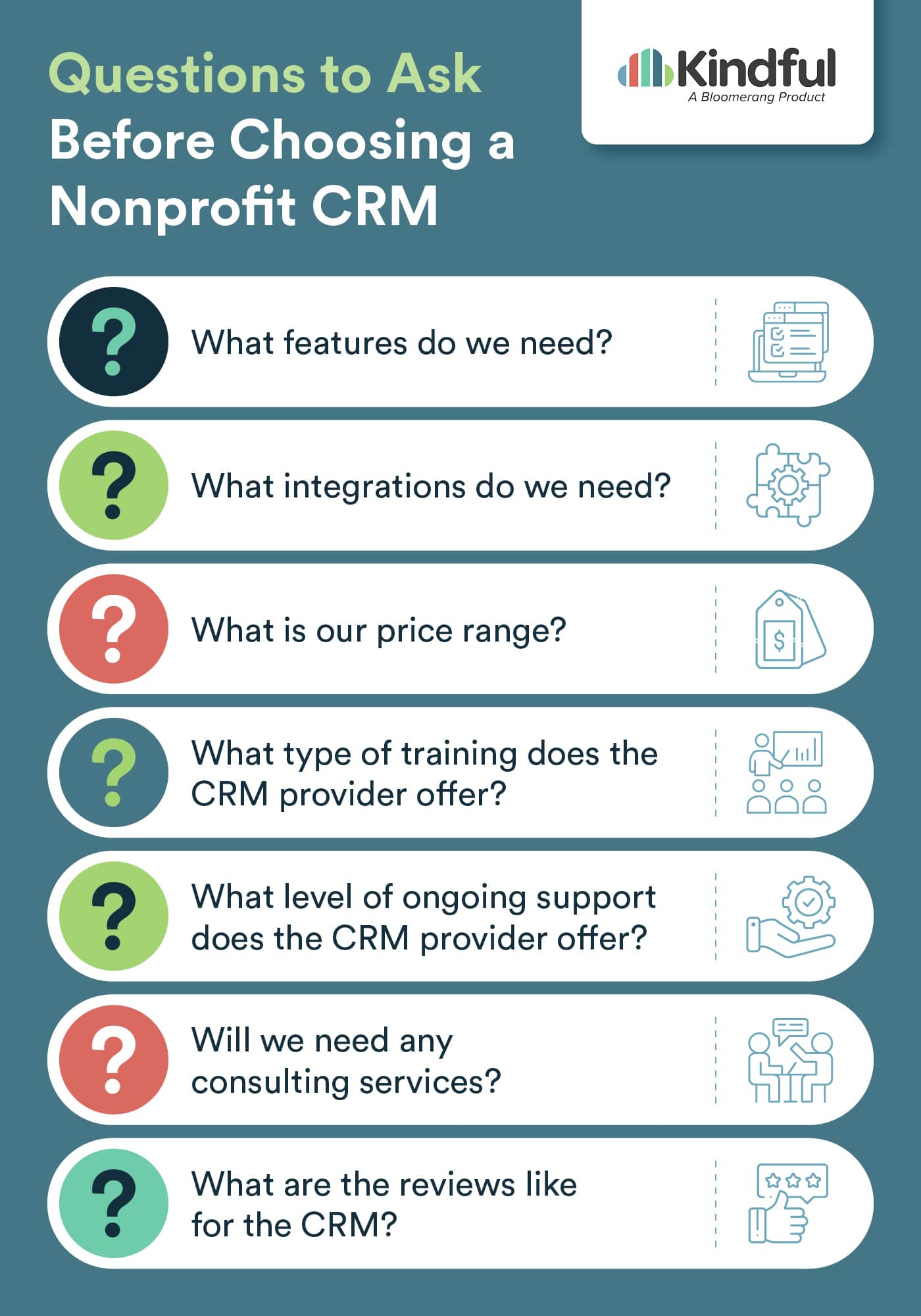
Bring other team members who will use your CRM regularly into the discussion, like your executive director, development director, donor relationship manager, and database manager. Once you consider all these questions with your team, pick your top two or three CRM providers, and schedule a call with each provider. After that, it’s just a matter of choosing the one that makes the most sense for your team!
Prioritizing your donors requires prioritizing your donor data. With a nonprofit CRM, you can improve donor relationships and maximize your positive impact on the world. Review these additional resources for more information about using your nonprofit software to the fullest: